Coastal Property Docs creates a visual and spatial record of storm-damaged properties after the site is safe—before temporary repairs, tarping, debris removal, cleanup, demolition, and reconstruction materially alter the property.
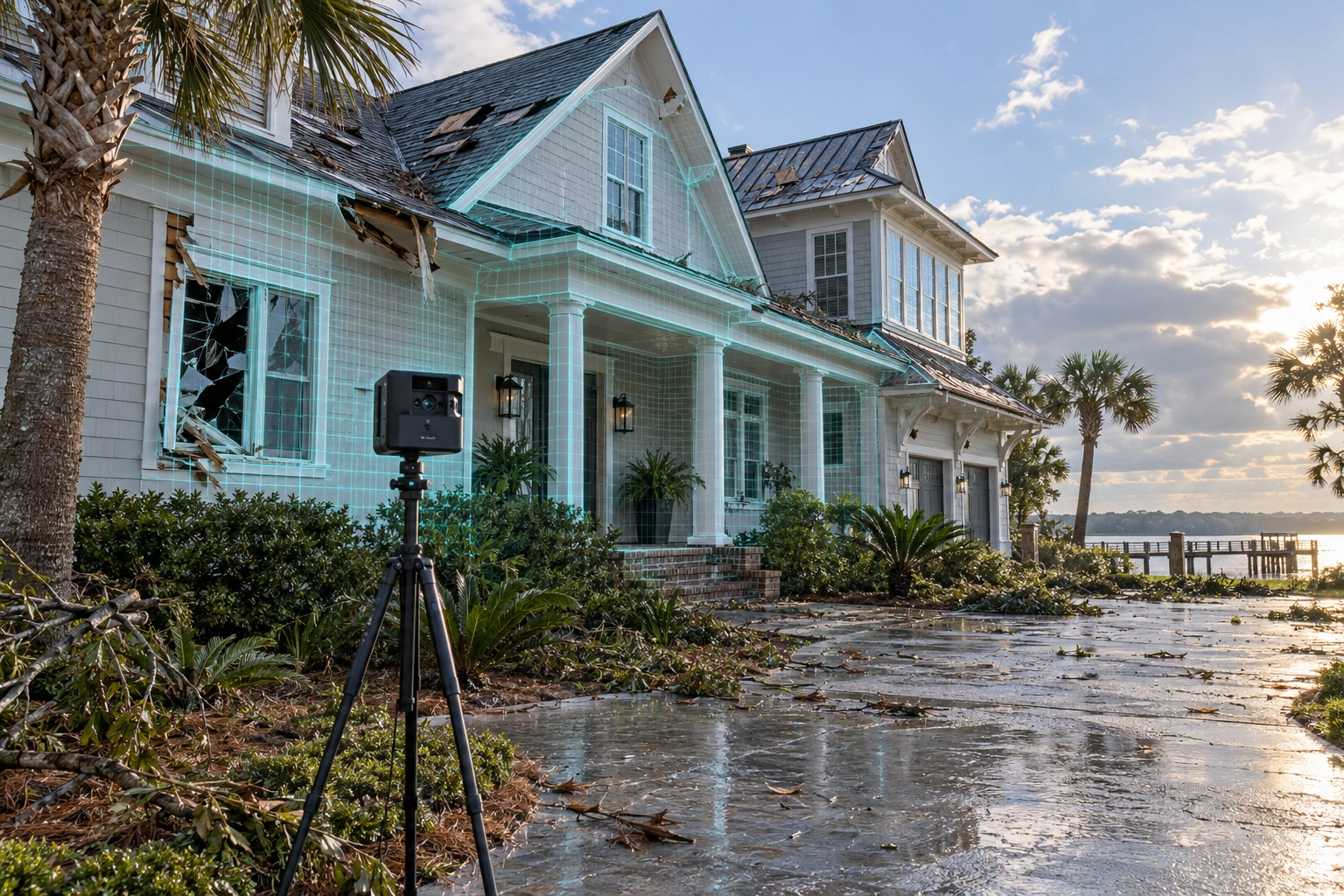
Wind, hail, falling debris, and heavy rain can affect the building envelope and create secondary damage inside.
Roof damage may lead to ceiling staining. Window damage may expose rooms to water. Exterior impacts can create interior conditions that aren't obvious from outside.
A connected property record helps preserve both sides of that story.
Storm documentation can preserve the relationship between exterior damage, potential entry points, interior conditions, affected rooms, and adjacent areas at the time of capture.
Storm-loss documentation can include both exterior and interior areas within the agreed project scope.
Document visible roofline, trim, exterior envelope, and storm-affected building conditions from accessible areas.
Preserve visible siding, cladding, soffit, fascia, gutter, and exterior finish conditions.
Capture visible broken, damaged, or storm-affected openings and surrounding conditions.
Document visible water staining and storm-related interior conditions after exterior failure.
Preserve visible interior finish damage and the surrounding room context.
Document visible debris impact, contents, surrounding spaces, and relevant adjacent property conditions.
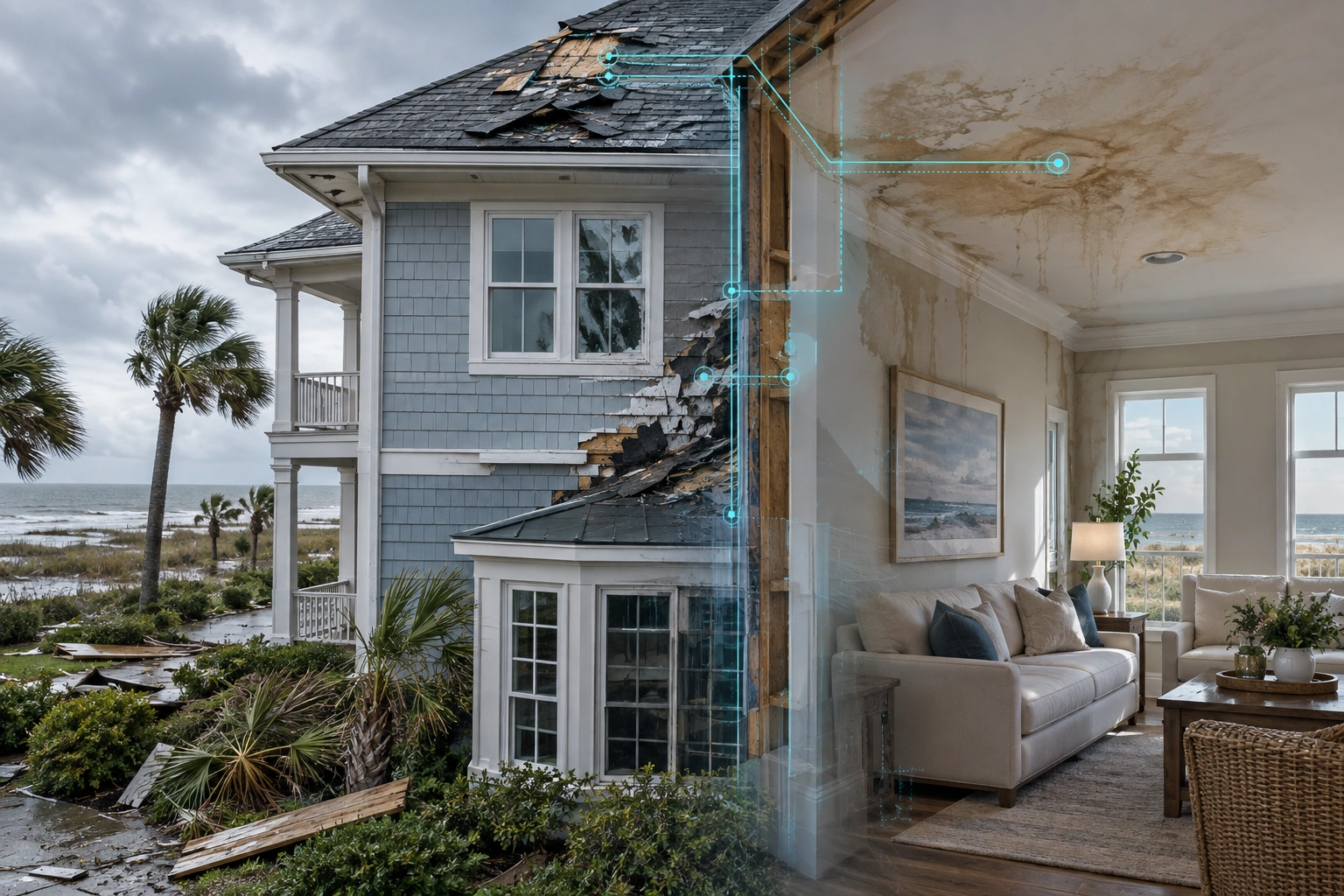
Storm damage often doesn't stop at the exterior surface. A damaged roof, opening, siding area, or building-envelope component may correspond with visible conditions inside.
Documenting both areas can preserve a more complete visual reference than treating exterior and interior photographs as separate collections.
Temporary repairs and cleanup can begin quickly after a storm. Documentation creates a visual reference before those conditions change.
Capture visible property conditions before tarping, cleanup, or repair materially changes them.
Preserve how exterior storm impact relates to conditions inside the property.
Revisit documented areas without requiring another complete physical walkthrough.
Give authorized owners, contractors, adjusters, and stakeholders a shared visual reference.
Return to captured conditions when later questions arise about the property.
Maintain a visual reference after damaged materials, windows, roofing, or finishes are replaced.
Move through the model and see how a digital twin preserves the relationship between rooms and property conditions in a connected environment.
Temporary protection is often necessary after a severe storm, but tarps, board-ups, debris removal, and emergency repairs can cover or alter the original visible conditions.
When practical and safe, exterior documentation can preserve a visual record before those changes occur.
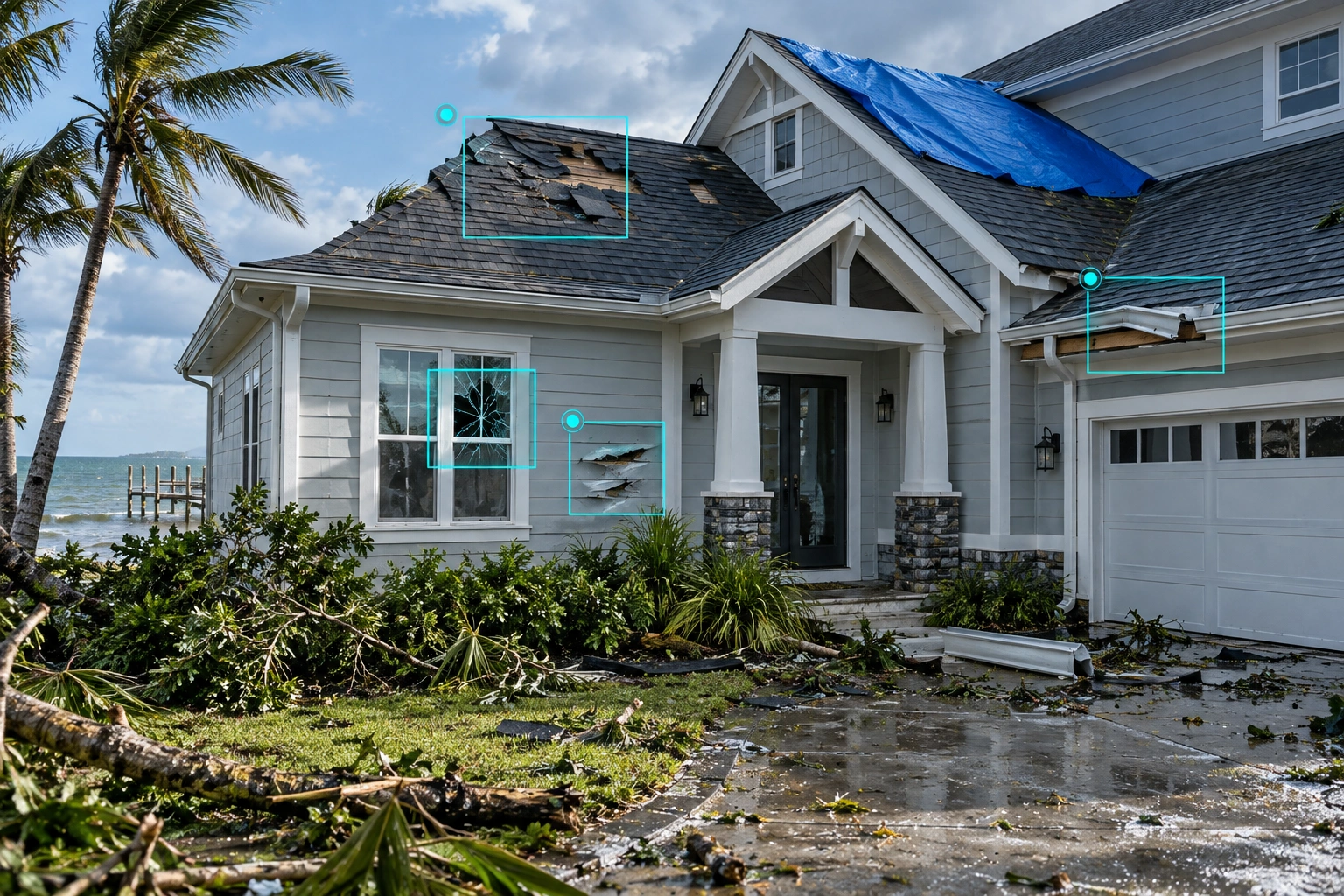
The package can be tailored around the property, storm conditions, and intended use.
Navigate documented interior property areas remotely.
Supporting imagery of visible storm-related conditions.
Property layouts when appropriate to project scope.
Spatial information for appropriate workflows.
Additional documentation after repair or reconstruction.
A post-storm property record can support multiple stakeholders throughout emergency protection, restoration, and reconstruction.
Preserve storm-loss conditions before cleanup and mitigation advance.
Use documented property context alongside their own roof-specific evaluations.
Maintain a clearer visual record of the property after a storm.
Document storm-related conditions across residential and commercial properties.
Review documented property conditions remotely when access is provided.
Revisit captured conditions after temporary repairs or demolition change the site.
Tarping, board-ups, debris removal, water mitigation, and emergency repairs may begin quickly after a storm. If the property is changing rapidly, identify the request as urgent so we can evaluate timing and access.
On the Get a Quote form, choose Emergency / ASAP when asked when you need the documentation.
Documentation begins only after the property is safe and the included areas are accessible.
Share the property, visible conditions, current repair status, and areas that need documentation.
We review which interior and exterior areas are safely accessible.
We systematically document the included exterior and interior areas.
You receive the digital twin and supporting deliverables included in scope.
Common questions about documenting storm-damaged properties.
Yes. The project scope can include safely accessible exterior conditions and interior areas affected by storm-related damage.
Yes. Documentation can preserve the current condition even after temporary protection has been installed. When possible, earlier documentation may preserve more of the original visible condition.
The property can still be documented in its current state. The resulting record will reflect conditions present at the time of capture.
Coastal Property Docs can document visible and safely accessible property conditions. We do not perform hail causation analysis, roof inspection, or engineering evaluation.
Yes. A follow-up capture can preserve repaired or reconstructed conditions.
Digital property records can support authorized remote sharing and review. Access arrangements can be discussed based on the project.
No. Coastal Property Docs provides visual and spatial property documentation. Roof inspections should be performed by appropriately qualified roofing or inspection professionals.
No. Our documentation is a visual property record and does not replace structural engineering, roofing inspection, insurance adjusting, causation analysis, appraisal, or coverage determinations.
Tell us about the property, visible damage, temporary repairs, and current project timing. If the site is changing quickly, mark the request as urgent so we can evaluate scheduling.